Cosmic rays, mysterious particles from the cosmos, have captivated scientists and astronomers alike with their enigmatic origins and profound implications for understanding the universe. These particles, traveling at nearly the speed of light, bring tales from the far reaches of space right to our doorstep.
Cosmic rays are not rays at all but rather incredibly fast-moving particles that originate from outer space. Predominantly made up of protons, these particles are remnants of atoms stripped of their electrons, revealing their bare nuclei. Earth is bombarded daily by trillions of these particles, though most are harmlessly deflected by our planet’s atmosphere and magnetic field. When cosmic rays do collide with atmospheric particles, they generate a cascade of secondary particles that can reach the ground, providing scientists with valuable data about their journey through space.
Kjpargeter | Freepik | Cosmic rays are not rays but incredibly fast-moving particles originating from outer space.
The quest to understand cosmic rays began in earnest in the early 20th century, with pioneering experiments that revealed their existence and extraterrestrial origin. In 1912, Victor Hess made a groundbreaking balloon flight that demonstrated increased radiation with altitude, pointing to a source beyond Earth’s atmosphere. This discovery earned him the Nobel Prize and paved the way for further research. Nobel laureate Robert Millikan coined the term “cosmic ray” itself in 1925, although we now understand these phenomena to be particles rather than rays.
Identifying the origins of cosmic rays poses a significant challenge due to the deflection of these charged particles by magnetic fields in space. However, scientists can infer the cosmic events capable of producing such high-speed particles by measuring their energies. Supernovas, black holes, neutron stars, and even collisions of galaxies are all potential cosmic factories churning out cosmic rays. These particles serve as messengers, offering clues about the violent processes that govern the cosmos and the universe’s structure.
Pixabay | Pexels | Earth is bombarded daily by trillions of these particles, though most are harmlessly deflected by our planet’s atmosphere and magnetic field.
Cosmic rays have proven instrumental in deepening our understanding of the universe. By studying these particles, scientists have discovered new subatomic particles like the positron and the muon, expanding the field of particle physics. Moreover, cosmic rays have provided insights into the chemical composition of the universe and the dynamic processes occurring around supermassive black holes and during stellar explosions.
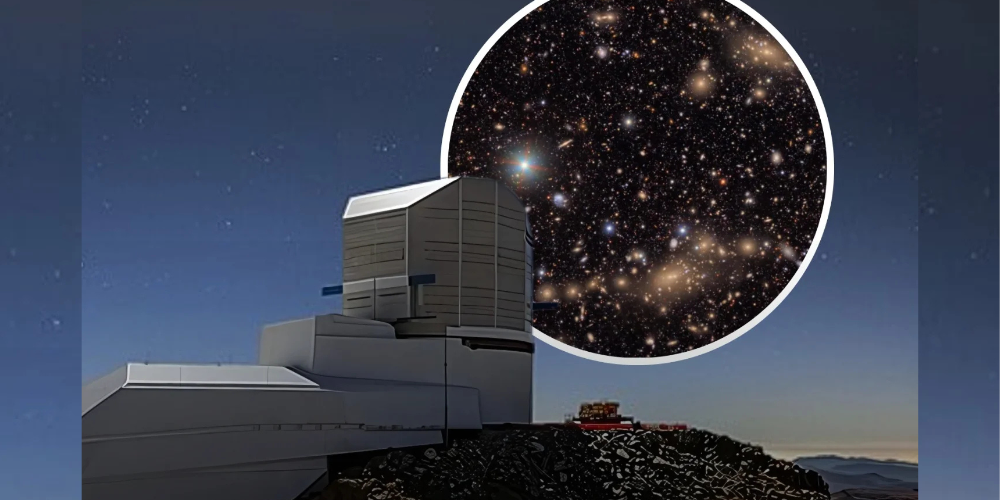
Scientists employ various detection methods to study cosmic rays on the ground and in space. Ground-based observatories like the Pierre Auger Observatory in Argentina and the High Altitude Water Cherenkov Observatory in Mexico are crucial in tracking these particles. Additionally, instruments aboard balloons and spacecraft, such as NASA’s Parker Solar Probe and the Voyager satellites, capture cosmic rays in their detectors, offering a clearer picture of cosmic radiation across different environments.
Wirestock | Freepik | Scientists employ various detection methods to study cosmic rays on the ground and in space.
Despite over a century of research, many questions about cosmic rays still need to be answered. Their exact sources, the mechanisms behind their acceleration to extreme energies, and their potential impacts on climate and planetary systems continue to elude full understanding. The high-energy cosmic rays, in particular, challenge our current knowledge, as their origins could be as exotic as starburst galaxies or the tumultuous regions surrounding supermassive black holes.
While largely benign to life on Earth due to our protective atmosphere and magnetic field, cosmic rays pose significant challenges to space travel and the operation of spaceborne equipment. As we venture further into space, understanding and mitigating the effects of cosmic rays will be crucial for astronauts’ safety and the success of interplanetary missions.
The study of cosmic rays stands at the intersection of particle physics, astrophysics, and cosmology, offering a unique perspective on the universe’s most energetic phenomena. As technology advances and our observational capabilities improve, the secrets of cosmic rays are slowly being unraveled, promising to shed light on the darkest corners of the universe and the most energetic events in cosmic history.