In a groundbreaking observation, astronomers have captured an extraordinary moment in the cosmos—a high-speed, high-stakes confrontation between two galaxies over 11 billion light-years away.
This isn’t just any merger. It’s a rare, aggressive event where one galaxy is striking the other with intense quasar radiation, dramatically changing its ability to form new stars.
This unprecedented sighting is now offering a deeper look into how galaxies interact, evolve, and sometimes collide with devastating consequences.
The “Cosmic Joust”—When Galaxies Collide
Study lead Pasquier Noterdaeme of the Institut d’Astrophysique de Paris explains, “We’ve named this the ‘cosmic joust’ because of the repeating, head-on nature of their encounters. But what makes this truly unusual is that one of the galaxies uses its quasar like a radiation lance to impact the other.”
What Quasars Really Do in Galactic Mergers
Quasars are often linked to galactic evolution, especially in the earlier phases of the Universe. But this observation goes further—it reveals how quasar radiation influences star formation in real-time.
As light from the quasar passes through the neighboring galaxy, it disrupts the normal flow of gas and dust. Typically, these materials serve as the building blocks for new stars. But in this cosmic duel, much of the gas has been stripped or compressed into such dense, tiny regions that new star formation becomes almost impossible.
According to co-researcher Sergei Balashev from the Ioffe Institute in Russia, “This is the first time we’re seeing a quasar’s radiation directly reshaping a galaxy’s internal gas in such a detailed way. Only the densest pockets of gas remain, which are too small to support any real star formation.”
The Role of Supermassive Black Holes
The event has broader implications. Galactic collisions often funnel enormous volumes of gas toward their centers, where black holes lie waiting. In this clash, it’s believed the galaxy with the quasar is feeding off this influx, enabling it to sustain its energy output and continue attacking its companion.
This process not only changes the structure of the smaller galaxy but also fuels further quasar activity, creating a cycle of destruction and renewal that could have long-lasting effects on both galaxies involved.
How Astronomers Captured the Event
The two galaxies appeared as a single blurry object in previous observations, but with ALMA’s high-resolution imaging and the VLT’s X-shooter instrument, scientists were finally able to distinguish them clearly. The light captured took over 11 billion years to reach Earth, meaning this cosmic clash happened when the Universe was just 18% of its current age.
Researchers studied how the quasar’s radiation moved through the other galaxy’s gas clouds using spectroscopy. This allowed them to understand not just where the light was going, but what it was doing as it passed through different regions.
A Glimpse Into the Distant Past of Galaxies
space.com | Galaxy collisions reveal how early, violent interactions molded galactic structure and growth.
These types of galaxy collisions were more frequent in the early Universe. Observing them now offers a unique look into how galaxies developed in their youth—and how violent interactions shaped their structure. It also offers fresh insight into how quasars may have played a bigger role in galactic evolution than previously assumed.
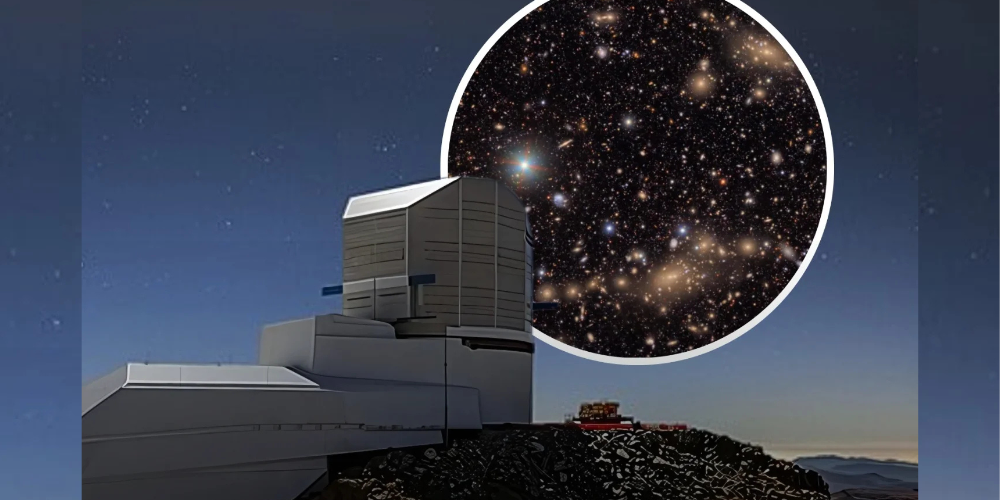
As telescopes improve, researchers expect to conduct even more detailed studies. The Extremely Large Telescope (ELT), now being developed by the European Southern Observatory, will help scientists observe events like this more closely.
Noterdaeme explains, “Larger and more powerful telescopes will let us go even further. We’ll be able to study similar systems in greater detail and better understand how quasars affect their host and nearby galaxies.”
What This Discovery Means
This rare observation of galaxies in active conflict shows how powerful and destructive quasar radiation can be. It’s a reminder that galactic evolution isn’t always slow or peaceful—it can involve bursts of extreme energy, reshaping entire systems in its wake.
By studying events like the “cosmic joust,” astronomers get one step closer to understanding the life cycle of galaxies and the forces that mold them across billions of years.