
The universe has always been a mysterious entity. Amid its vast expanse, the planets have had a special place in our hearts and minds. But why? Let’s dive into the cosmic significance of these celestial bodies.
First off, how many planets are we talking about? In our very own solar system, we used to have a solid group of nine. But in 2006, Pluto was demoted to a “dwarf planet,” leaving us with eight.
The line-up now goes:
ZCH / Pexels / Excluding Pluto, there are eight planets. And each has its own significance.
While you might still be on Team Pluto, it is good to know the official roster.
Each planet has its unique personality. Earth is our beloved home – the blue marble. Mars, with its reddish hue, is often dubbed the “Red Planet,” a potential future home for humanity. The largest, Jupiter, has a storm so big that three Earths could fit inside it.
These personalities have made the planets significant in different cultures, myths, and even astrological beliefs.
Ever wondered why some planets have names of ancient gods? Romans named the five planets visible to the naked eye after their gods: Mercury, Venus, Mars, Jupiter, and Saturn. For instance, Mars, the god of war, lent his name to our fiery red neighbor.
These celestial bodies play crucial roles in astrology too. Whether or not you are the type to check your horoscope daily, it is hard to deny the allure of believing that distant planets might influence our moods and destinies. In astrology, each planet signifies specific energies and characteristics.
Stein / Pexels / Based on its structure and functionality, each planet has a unique personality.
Mercury might rule communication, while Venus oversees love and beauty. So, the next time someone says they are feeling out of sorts because “Mercury is in retrograde,” you will know what they are talking about!
Moving from myths to the realm of science, planets serve as benchmarks for understanding cosmic phenomena. The conditions and compositions of planets like Venus or Mars give scientists clues about Earth’s past, present, and potential future.
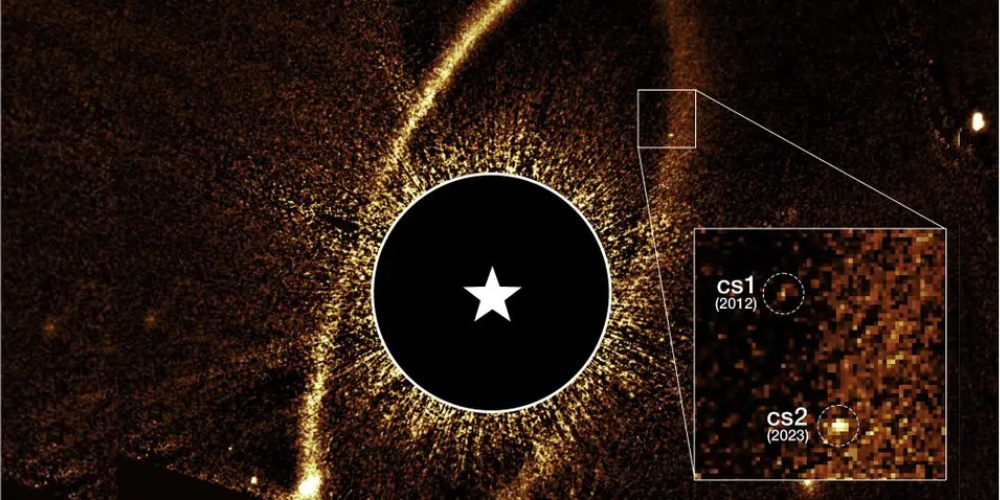
Moreover, by studying planets, we have made leaps in the field of exoplanet research. These are planets beyond our solar system. As of my last update, scientists have confirmed the existence of over 4,000 exoplanets! Who knows? Some might even harbor life. The discovery of exoplanets not only underscores the vastness of our universe but raises exhilarating questions about our place within it.
Pexels / Beyond mythology, all nine planets (including Pluto) have a benchmark significance in science.
Finally, where would pop culture be without planets? Movies like “Star Wars” and “Star Trek” would lose their charm without exotic planetary settings. And songs like “Drops of Jupiter” by Train might need a different title!
Beyond entertainment, the significance of planets lies in their ability to inspire. They make us question our existence, purpose, and the mysteries of the cosmos. They remind us of our tiny yet unique place in the universe.
Thus, planets are more than just orbs in space. They are windows to understanding our past, present, and potential futures. Whether you are a fan of myths and science or just love a starry night, planets offer a little something for everyone.