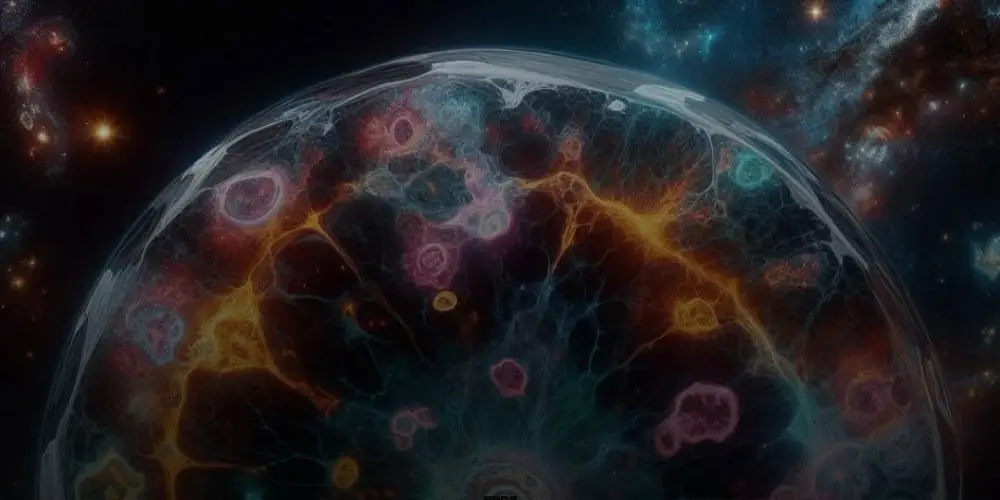
Scientists have used a powerful combination of astronomical data to create a “cosmic CT scan” of the universe. This scan has allowed researchers to track how matter has evolved over billions of years. Surprisingly, their findings show that the universe is less clumpy than expected, challenging current models.
The study combined data from two major sources:
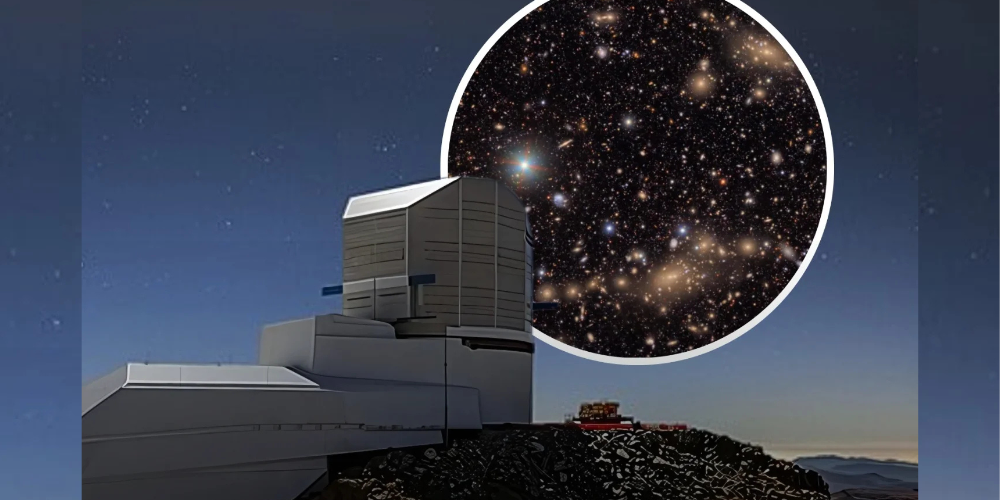
1. The Atacama Cosmology Telescope (ACT), which captures ancient cosmic light.
2. The Dark Energy Spectroscopic Instrument (DESI), which maps the structure of modern galaxies.
By layering these data sets, researchers created a detailed timeline of the universe’s evolution.
Mapping the Universe’s Evolution
Instagram | astronomy_eye | Scientists study how gravity shapes the universe over time and uncover new insights.
Scientists have long studied how gravity shapes cosmic structures. This new research provides a clearer picture of how matter has shifted over time. Mathew Madhavacheril from the University of Pennsylvania compared the process to a “cosmic CT scan.” He explained, “We can now track how matter clumped together over billions of years and see how gravity influenced the universe’s development.”
The Role of Ancient Light in This Study
To understand the universe’s past, researchers focused on the Cosmic Microwave Background (CMB)—a type of radiation that has existed since the Big Bang. Notably, Joshua Kim, a graduate researcher in the study, described the CMB as “the universe’s baby picture.” The Atacama Cosmology Telescope captured this radiation, revealing how gravity shaped the cosmos over 13.8 billion years.
Interestingly, this ancient light formed when the universe cooled enough for electrons and protons to combine into hydrogen atoms. Before this, free electrons scattered photons, making the universe opaque. Once neutral atoms formed, light could finally travel freely, creating the CMB we see today.
How Gravity Warps Light Over Time
As light from the CMB moves through space, it encounters massive structures like galaxies and galaxy clusters. These objects warp the light’s path, a phenomenon known as gravitational lensing.
Albert Einstein predicted this effect in his theory of general relativity. By analyzing how the CMB’s light bends and stretches, scientists can reconstruct the universe’s matter distribution over billions of years.
A Surprising Discovery – A Smoother Universe
Instagram | desisurvey | DESI and the Atacama Cosmology Telescope collaboration reveal a smoother universe than scientists expected.
The Atacama Cosmology Telescope provided a snapshot of the early universe, while DESI offered a more recent look by mapping millions of galaxies. Kim explained, “DESI’s data shows how galaxies are distributed at various distances, giving us a more recent picture of the universe.”
However, when researchers combined the datasets, they found something unexpected – the universe appeared smoother than predicted. This result suggests that the growth of cosmic structures may have slowed in ways current models don’t fully explain. While the discrepancy is small, it raises questions about whether new physics could be at play.
What This Means for Cosmology
The findings mostly align with Einstein’s theory of general relativity. However, Madhavacheril noted a small deviation in expected clumpiness around four billion years ago. He stated, “This could be an important clue, and further research is needed to explore it.”
Scientists plan to investigate this anomaly with upcoming telescopes, which will offer even more precise measurements.
Future Exploration of the Universe
This study marks a significant step forward in understanding how the universe has evolved. As researchers refine their methods, they may uncover even deeper cosmic mysteries. Meanwhile, with new telescopes on the horizon, astronomers hope to confirm whether this unexpected discovery signals new physics or simply a gap in our current understanding.
Every new observation brings us closer to answering some of the biggest questions about space and time. Ultimately, the next discoveries could completely reshape our view of the cosmos.