The phenomenon of retrograde motion is a fascinating aspect of planetary observation. When considering “what happens during the apparent retrograde motion of a planet?” it’s important to understand that this motion is more of an optical illusion than an actual reversal in direction. Retrograde motion occurs when a planet appears to move backward in its orbit, as seen from Earth. This intriguing phenomenon has puzzled and inspired astronomers for centuries.
Apparent retrograde motion can be perplexing because it defies the usual movement we expect from planets. Normally, planets move from west to east across the sky, following what is known as prograde motion. However, during certain periods, they pause, move backward (westward), and then resume their forward (eastward) motion. This temporary reversal is what we refer to as retrograde motion.
HT Correspondent | MSN | Apparent retrograde motion defies the usual movement we expect from planets.
The apparent retrograde motion results from Earth’s and other planets’ relative positions and motions. Simply put, Earth and the other planets do not orbit the Sun at the same speed. When Earth overtakes a slower-moving outer planet in its orbit, the planet appears to move backward against the backdrop of the stars. This is similar to the optical illusion that occurs when a car overtakes another on the highway—the slower car appears to move backward relative to the faster one.
Retrograde motion is more easily observed in the so-called superior planets, those that orbit the Sun farther from it than Earth, such as Mars, Jupiter, and Saturn. When Earth passes between the Sun and a superior planet, that planet appears to move in retrograde. On the other hand, inferior planets like Mercury and Venus, which orbit closer to the Sun than Earth, also exhibit retrograde motion, but the mechanics differ slightly. These planets appear to move backward when they pass between Earth and the Sun, which happens more frequently due to their shorter orbital periods.
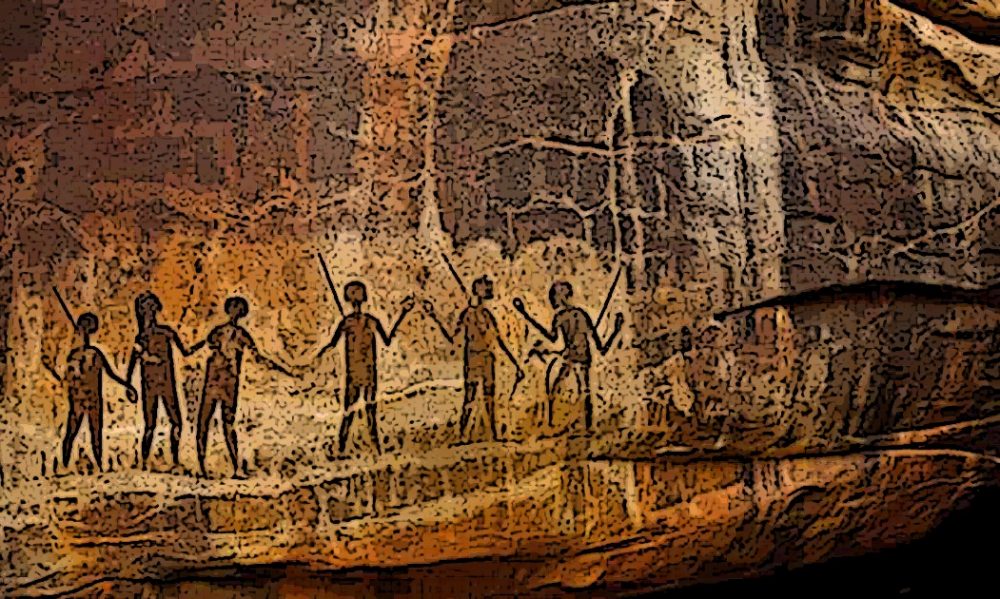
Historically, retrograde motion has played a significant role in shaping our understanding of the solar system. In ancient times, when the Earth was thought to be at the center of the universe, retrograde motion was a significant puzzle for astronomers. The geocentric model, which placed Earth at the center, struggled to explain why planets occasionally reverse their paths. It wasn’t until Copernicus proposed the heliocentric model and later confirmed by observations of Galileo that the true nature of retrograde motion was understood.
Saudi Moments | MSN | Retrograde motion plays a significant role in shaping our understanding of the solar system.
Observing retrograde motion can be a thrilling experience for astronomy enthusiasts. It provides a unique opportunity to witness the dynamic nature of our solar system. During retrograde periods, the affected planets can be seen shifting direction in the night sky, sometimes tracing a loop or zigzag pattern. This is especially noticeable with bright planets like Mars, whose reddish hue and noticeable retrograde loops have made it a favorite target for observers.
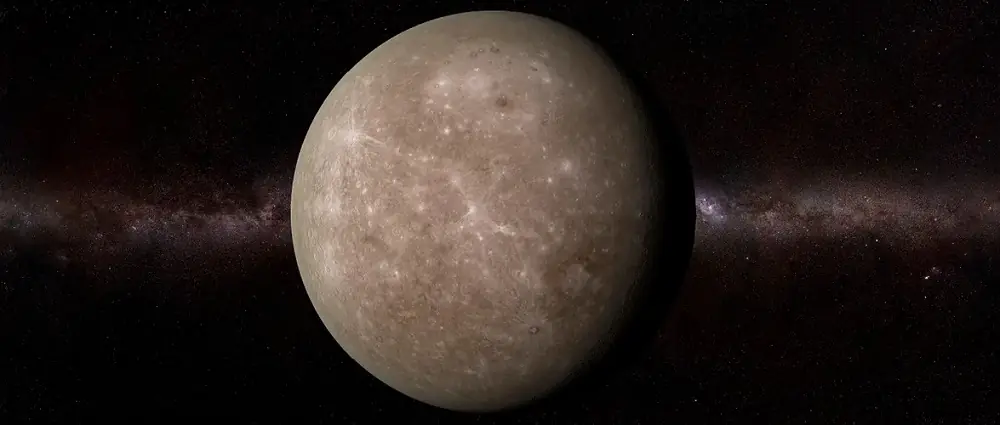
The timing of retrograde motion varies depending on the planet and its orbit. For example, Mars enters retrograde approximately every 26 months, making it a relatively frequent occurrence for this planet. In contrast, Jupiter and Saturn experience retrograde motion less frequently, about once a year, but their retrograde periods last longer. Conversely, Mercury has the shortest retrograde periods, occurring three to four times a year due to its swift orbit around the Sun.
In modern astronomy, retrograde motion is well understood and no longer seen as mysterious. It is simply a predictable consequence of the planets’ orbital mechanics. Today, astronomers use retrograde periods to study the planets more closely, as these times often coincide with a planet’s closest approach to Earth, making it appear larger and brighter in the sky.