Exploring the mysteries of our solar system reveals endless surprises, especially when it comes to Mercury, the planet closest to the Sun. Mercury stands out among the celestial bodies that orbit our star with its unique characteristics and peculiarities. Here are 10 astonishing fun facts about Mercury that will surely amaze you.
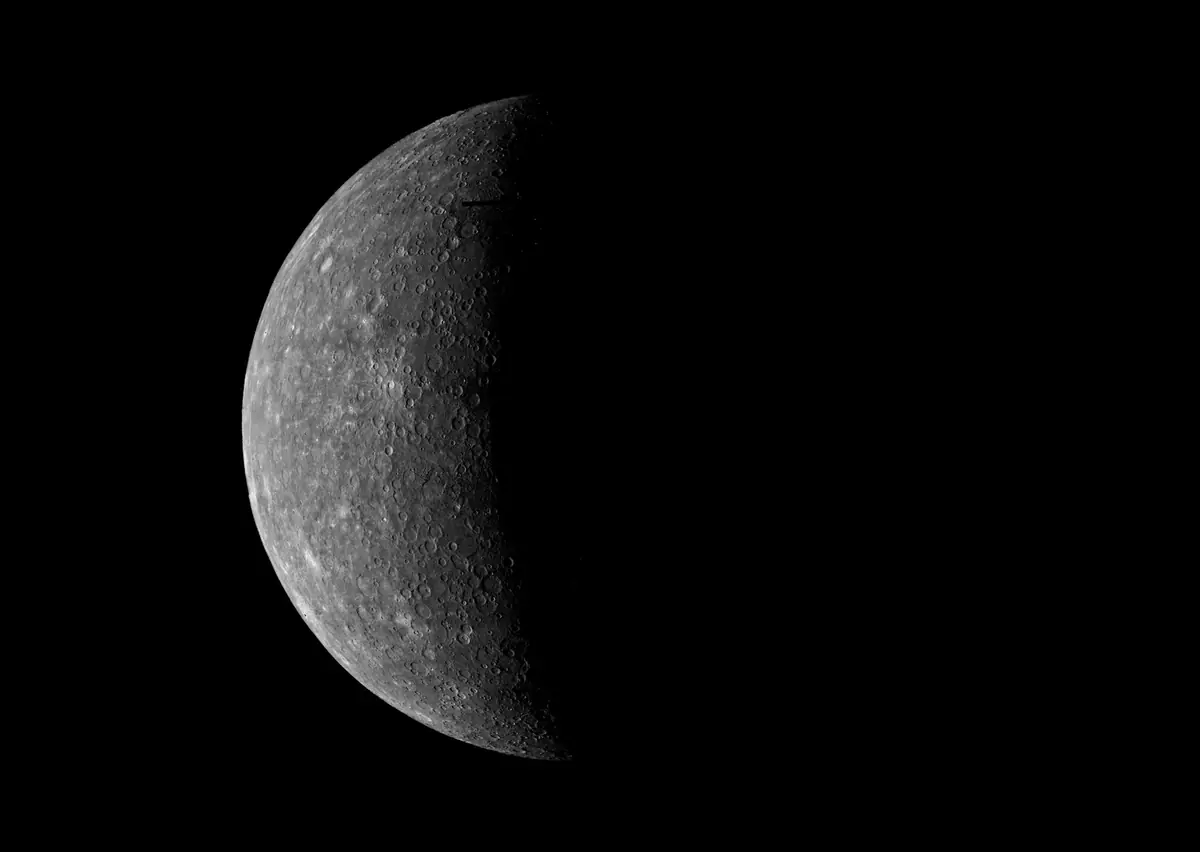
Despite its proximity to the Sun, Mercury exhibits the most extreme temperature fluctuations in the solar system. Lacking an atmosphere to trap heat, the surface of Mercury can soar to a scorching 800 degrees Fahrenheit during the day and plummet to a chilling minus 290 degrees Fahrenheit at night. This dramatic range in temperature is unmatched by any other planet.
ZCH | Pexels | Despite its proximity to the Sun, Mercury exhibits the most extreme temperature fluctuations in the solar system.
Mercury is the smallest planet in our solar system. With a diameter of about 3,030 miles, it’s only slightly larger than Earth’s moon and could fit across the continental United States. This makes it smaller than some of the moons orbiting other planets, like Saturn’s Titan and Jupiter’s Ganymede.
Mercury’s rugged, crater-pocked surface tells a history of brutal impacts, including surviving collisions with giant asteroids. This resilient little planet bears the scars of its turbulent past, giving scientists valuable clues about its composition and the early solar system.
Among the planets, Mercury’s orbit is an anomaly. It races around the Sun in just 88 Earth days, moving faster than any other planet. Mercury’s orbit is highly elliptical, stretching from 29 million miles at its closest to 42 million miles at its farthest from the Sun, contributing to its extreme temperature changes.
Incredibly, Mercury, a planet so close to the Sun, harbors ice within its shadowed polar craters. This discovery by NASA’s MESSENGER spacecraft in 2012 challenged previous assumptions and highlighted the complexity of Mercury’s environment. The ice exists because some craters never see sunlight, remaining perpetually shielded and cold.
Image by Space.com | Mercury harbors ice within its shadowed polar craters.
Mercury is distinctively dense, possessing a massive iron core of about 75% of its diameter. This core is significant in size and composition, containing more iron than any other planet in the solar system. The origins and implications of this unusually large core continue to intrigue and puzzle scientists.
Thanks to the MESSENGER mission, which orbited Mercury for over four years, we now have a complete map of the planet’s surface. These detailed images provide unprecedented insight into Mercury’s geological history and are crucial for planning future missions.
Mercury has what might be called a “whiff” of an atmosphere, so thin that it’s technically referred to as an exosphere. This exosphere is composed of atoms blasted off the planet’s surface by solar radiation, including oxygen, sodium, and hydrogen.
Mercury is not just a passive celestial body; it actively sheds material into space, creating comet-like tails. These tails are primarily made of sodium particles that glow due to solar radiation, offering a spectacular yet eerie visual phenomena best observed through long-exposure photography from Earth.
The planet’s weak magnetic field, which is only 1% of Earth’s strength, is nonetheless capable of creating magnetic tornadoes. These phenomena occur when Mercury’s magnetic field interacts with solar wind, funneling hot plasma to the planet’s surface. The effects are dramatic, stirring up the surface material and reshaping our understanding of Mercury’s magnetic environment.
Image by Space.com | The planet’s weak magnetic field, which is only 1% of Earth’s strength, is nonetheless capable of creating magnetic tornadoes.
These fun facts about Mercury enhance our knowledge and deepen our appreciation for the dynamic and often surprising nature of our solar system. Mercury may be small, but it is a planet of extremes and oddities that continues to captivate scientists and astronomers worldwide.