Tarot cards serve as windows to the soul, illuminating paths through symbolic imagery and profound insights. So, what is tarot? Whether you’re a seasoned enthusiast or a curious newcomer, understanding its rich history and how it is used today can enrich your spiritual journey.
At its core, tarot is a captivating form of guidance utilizing a deck of 78 cards, each bearing unique symbolism and significance. These cards are tools used to delve into the past, present, and future, offering reflections rather than concrete predictions. This reflective nature sets tarot apart from simple fortune-telling. It’s not about foreseeing a fixed future but about exploring potential directions and understanding deeper personal truths.
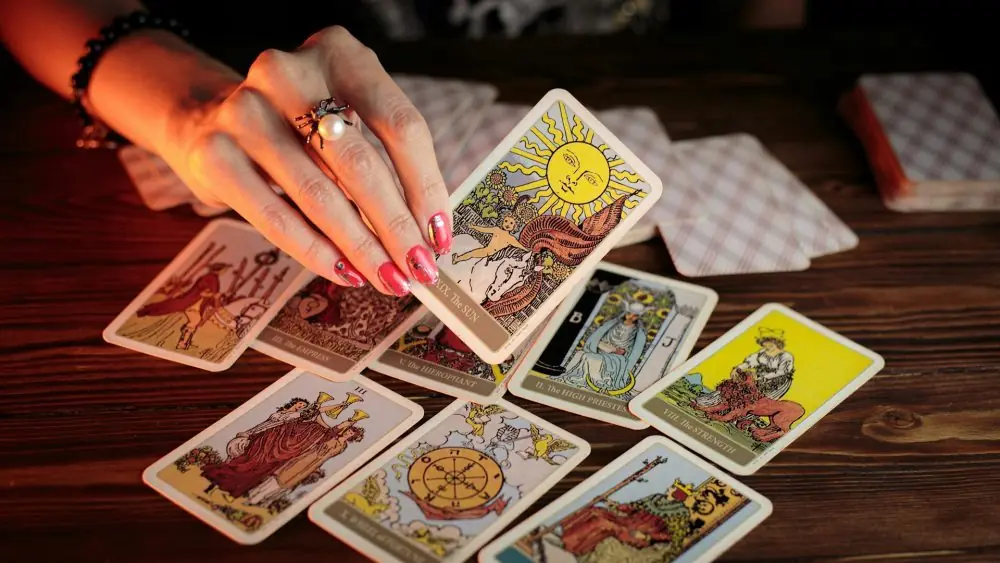
Cottonbro studio | Pexels | Tarot is a captivating form of guidance utilizing a deck of 78 cards, each bearing unique symbolism and significance.
Tarot’s appeal spans various aspects of life, providing clarity on matters like relationships, career choices, and personal growth. Its power lies in the personal interaction between the reader and the cards, which allows for a highly individualized interpretation. The true magic of tarot is its ability to foster self-awareness and personal development.
The origins of tarot cards lead us back to northern Italy in the 15th century, where they first emerged not for mysticism but for play. These early tarot decks were similar to today’s playing cards and were used in games. It wasn’t until the 18th century that their use as a divinatory tool became popular.
The imagery on the cards is believed to draw from a rich tapestry of influences, including ancient Egyptian, Jewish, and Christian mystical traditions. However, some theories attribute their symbolism to the Italian Renaissance’s fascination with the occult. The term “tarot” itself is enigmatic, with possible roots in the Arabic word “tar,” meaning “path,” or the Italian “tarocchi,” referring to a type of playing card.
Starting with tarot can feel daunting due to its depth and complexity. However, breaking down the basics can demystify the process and open a new world of insight. The tarot deck is divided into the Major Arcana and Minor Arcana, with the former including 22 cards that represent significant life themes and events and the latter comprising 56 cards that depict everyday situations.
Viva Luna Studios | Unsplash | The tarot deck is divided into the Major Arcana and Minor Arcana, with the former including 22 cards and the latter comprising 56 cards.
To embark on your tarot journey, select a deck that resonates with you. The iconic Rider-Waite tarot deck is a popular choice for beginners due to its clear symbolism. Spend time connecting with your deck, understanding the imagery and meanings of each card. This connection is foundational to performing meaningful readings.
When you feel ready, begin with simple spreads, such as the three-card layout, which can provide insight into the evolution of a situation or your own growth. As you lay out the cards, focus on their imagery and your intuitive response to them. Over time, this practice will help you develop a more nuanced understanding of the cards and their messages.
Interpreting tarot involves more than memorizing card meanings—it requires a deep engagement with the imagery and an openness to intuitive insights. Pay attention to the details in the images; even subtle symbols can dramatically alter a card’s message. Reflect on how the cards interact with each other and consider their positions within your spread to glean a comprehensive view of their guidance.
Freepik | Interpreting tarot involves more than memorizing card meanings—it requires a deep engagement with the imagery and an openness to intuitive insights.
Intuition is indispensable in tarot readings. It enriches the interpretative process by enabling a personal connection to the cards’ messages. Developing your intuitive abilities can enhance the relevance and power of your readings, making them more resonant and helpful.
By understanding what tarot is and how it functions not just as a divinatory tool but as a medium for personal insight and growth, you can begin to unlock its potential. Each card and spread offers a unique pathway to understanding life’s complex tapestry, making tarot a valuable companion on your spiritual journey.