
Time doesn’t always pass at the same pace. Under certain conditions, people experience what psychologists call “time expansion experiences” (TEEs)—moments when seconds feel like minutes. These instances are reported during emergencies, intense concentration, meditation, and even some sporting events.
Recent research suggests that the perception of time is far more flexible than commonly assumed, and understanding this phenomenon sheds light on the extraordinary capabilities of the human mind.
What Are Time Expansion Experiences?
Time expansion experiences occur when the brain slows its perception of events, making moments feel extended. Psychologist Steve Taylor of Leeds Beckett University has spent over a decade investigating these experiences. His research indicates that TEEs are not limited to life-threatening situations. While some occur during accidents, others emerge during sports, deep meditation, or psychedelic experiences, illustrating the mind’s ability to alter temporal perception in diverse contexts.
Instagram | stevetaylorauthor | Psychologist Steve Taylor has studied time expansion experiences for over a decade.
Taylor’s personal encounter with a car crash in 2014 highlighted the phenomenon. During the incident, he perceived the surrounding cars moving in extreme slow motion and felt an unusual clarity in processing details and regaining control. This personal experience sparked a decade-long inquiry into why certain moments seem to stretch beyond normal temporal boundaries.
How the Brain Alters Time Perception
Traditional theories suggest that TEEs result from the body’s fight-or-flight response, triggered by the release of noradrenaline. This explanation fits emergency situations but fails to account for TEEs during meditation or deep concentration. Another perspective claims that TEEs are illusions of memory. In this view, heightened awareness in emergencies records more details, creating the perception that time slowed when recalling the event.
Taylor’s findings challenge these assumptions. People experiencing TEEs report processing thoughts and information at speeds beyond ordinary limits, indicating an altered state of consciousness rather than a memory illusion. These moments represent a shift into what Taylor describes as a different “time-world,” where the mind temporarily steps outside its usual temporal framework.
Situations That Trigger Time Expansion
1. Accidents and emergencies – Sudden shocks can disrupt regular cognitive patterns, giving the mind a sense of extended time.
2. Sports and high-focus activities – Intense “super-absorption” allows athletes to anticipate and respond with heightened awareness.
3. Meditation and mindfulness – Deep mental focus slows the perception of passing seconds, allowing the brain to explore experiences in greater depth.
4. Psychedelic experiences – Certain substances can trigger altered temporal states, stretching or compressing time in unexpected ways.
Time as a Psychological Phenomenon
Freepik | Meditation’s intense focus expands time by slowing perception, allowing for deeper exploration of experiences.
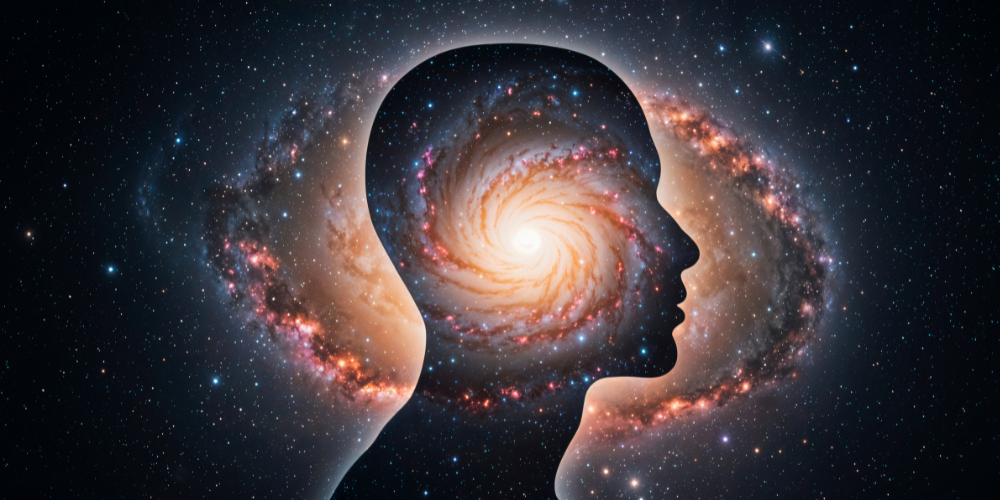
Time is often thought of as fixed, but both science and psychology suggest otherwise. Astrophysicists explain that massive objects can slow time around them, and cosmologists theorize that different areas of the universe may experience time at varying rates. On a more personal level, the perception of time can fluctuate significantly depending on mental state.
Taylor emphasizes that TEEs are not just quirks of perception—they reveal the human mind’s adaptability. During these altered states, individuals experience a heightened sense of clarity and control, often noticing details that go unnoticed in ordinary moments.
Implications of Time Expansion Experiences
Understanding Time Expansion Experiences (TEEs) provides insight into the brain’s capacity for focus, survival, and perception. Research demonstrates that time is not just a mechanical sequence of seconds and minutes; it is a psychological dimension shaped by attention, awareness, and mental state.
These subjective experiences of time, whether during an emergency, an athletic event, meditation, or deep concentration, highlight how the mind can seemingly stretch reality. Researchers suggest these experiences might offer evolutionary benefits, allowing for effective responses in critical situations, and they also occur in peaceful, controlled settings, underscoring the broader potential of human consciousness.