Astrology has captured renewed attention in recent years, especially among millennials seeking meaning beyond data and analytics. Yet, astrology’s roots stretch far deeper than social media horoscopes—it once guided some of history’s greatest scientific thinkers.
Long before algorithms began predicting human behavior, the stars were seen as a map of probabilities, shaping ideas that would later influence modern science and data interpretation.
The Connection Between Astrology and Science
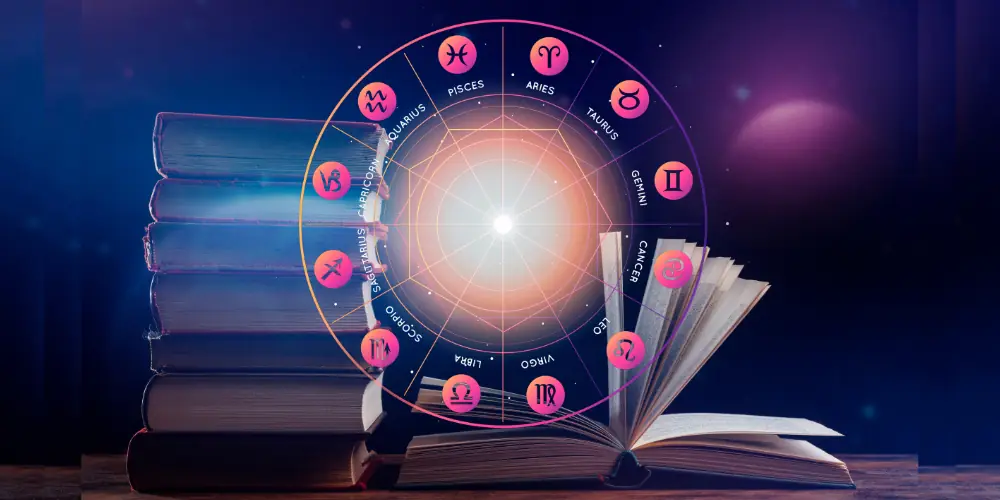
Freepik | Astrology was historically a key link between the cosmos and human experience, shaping early science.
Astrology is often labeled as pseudoscience, but it once shaped how people studied the universe. It connects celestial movements with human experiences and once served as a foundation for scientific discovery.
According to “The Guardian” (January 11, 2019), astrology played a key role in the early development of astronomy.
Johannes Kepler, a mathematician and astronomer, studied astrology to support his heliocentric theory—the idea that the sun sits at the center of our solar system. Nicolas Copernicus, who shared the same belief, also practiced astrology. He created horoscopes for Rudolf II, the King of Bohemia. Their work bridged faith, data, and observation in a time when science and mysticism often overlapped.
This historic link is explored in Alexander Boxer’s book “A Scheme of Heaven: Astrology and the Birth of Science” (2020). Boxer, a data scientist, explains how astrology’s early methods resemble modern data analysis. Both aim to recognize patterns and use them to forecast events.
Ancient Predictive Thinking
Astrology’s story goes back to the 2nd century BC, when Hipparchus, a Greek astronomer, charted the stars with precise measurements. He believed accurate data created reliable predictions. To achieve that, he developed advanced geometric tools to improve planetary observations.
Boxer describes astrology as “a deeply deterministic mathematical vision of human conditions.” Ancient astrologers believed life’s events followed patterns that could be measured. This belief mirrors how today’s data scientists look for trends in human behavior through numbers and statistics.
Astrology turned observation into insight. What once involved star charts and planetary symbols has now evolved into algorithms and data models. Both aim to decode the same mystery—how patterns shape outcomes.
From Horoscopes to Data Models
Freepik | Modern online astrology merges traditional ideas and machine-based analysis via data networks.
The astrology columns of the 19th century often offered vague and inconsistent predictions. But the digital era transformed the field. Online astrology now runs on vast data networks, blending traditional ideas with machine-based analysis.
Boxer compares these systems to modern algorithms. He notes that today’s tech companies collect user data to predict choices, much like astrologers once predicted behavior through planetary movement. Streaming platforms and e-commerce sites rely on this predictive approach every day.
Human curiosity has not changed. Whether it’s a horoscope forecasting emotional shifts or an algorithm predicting shopping trends, both rely on data to anticipate what comes next.
The Timeless Quest for Prediction
Astrology’s ongoing popularity reflects a deep human desire to understand the unseen forces that shape life. It encourages people to find meaning through patterns, even in an age ruled by analytics.
Today’s predictive tools may use algorithms instead of constellations, yet both serve the same purpose—making sense of uncertainty. The human instinct to foresee outcomes continues to unite stargazers and data scientists alike.
Thinkers such as Hipparchus, Copernicus, and Kepler laid the foundation for this shared pursuit. Their focus on observation, measurement, and curiosity still drives how modern data models operate. From ancient star maps to digital dashboards, humanity’s quest to predict and understand patterns has always followed the same path.